
Eco-Friendly Appliances To Keep Your Property Management Green


TL;DR
- Eco-friendly appliances use less energy and water than conventional models, from refrigerators and dishwashers to heating and cooling systems. For property managers they cut utility costs, shrink a building's carbon footprint, and make the property easier to market to renters who care about sustainability.
- To choose them, look for the ENERGY STAR label for energy efficiency and the WaterSense label for water efficiency, both EPA programs, and weigh durability and build quality. A National Multifamily Housing Council survey found that around 90% of renters call sustainability essential, and EPA data puts buildings at 39% of US energy use.
- The payoff is lower energy and water bills, possible utility rebates, stronger tenant attraction and retention, and higher property value. A University of California, Berkeley study found homes with solar panels sell for around 4% more, and durable units also reduce maintenance costs over time.
- SmartHQ™ Management helps property teams monitor connected GE Appliances and PTAC or VTAC units in real time across a portfolio and track energy use separately in reports, so upgrade and replacement decisions rest on measured data.
Are you tired of high energy bills and the constant struggle to reduce your carbon footprint? Did you know that running an additional older model unit can consume up to 66% more energy than a newer model that is ENERGY STAR® equivalent? It's no secret that our planet is facing a critical environmental crisis. From melting ice caps to extreme weather patterns, the effects of climate change are already being felt across the globe. That's why it's more important than ever for property managers to take steps towards more sustainable practices, and one way to do that is by implementing eco-friendly appliances.
As property managers, one of the most effective ways to reduce your carbon footprint is by implementing eco-friendly appliances in your properties. These appliances are designed to use less energy and water, reducing your property's environmental impact.
Going Green: Understanding Eco-Friendly Appliances

Firstly, what are eco-friendly appliances? Eco-friendly appliances are designed with energy efficiency and sustainability in mind. They use less energy and water to operate than traditional appliances, which makes them an excellent option for environmentally conscious property managers. These appliances can range from refrigerators and dishwashers to heating and cooling systems and everything in between.
For example, eco-friendly refrigerators are designed with advanced insulation and compressor technology that reduces energy consumption. This means the fridge uses less electricity to keep your food and drinks cold, resulting in lower energy bills and a reduced carbon footprint. Similarly, eco-friendly dishwashers use less water and energy to wash dishes, saving you money on water and electricity bills.
Eco-friendly heating and cooling systems, such as heat pumps and geothermal systems, use renewable energy sources to heat and cool your properties. These systems are designed to work more efficiently than traditional heating and cooling systems, using less energy to produce the same amount of heat or cool air. This not only helps the environment, but it also saves you money on utility bills.
To ensure that eco-friendly appliances meet strict energy efficiency standards, they are typically marked with an ENERGY STAR® label. This label is awarded by the U.S. Environmental Protection Agency (EPA) and indicates that the appliance meets strict guidelines for energy efficiency. The EPA sets these guidelines to help consumers identify appliances that use less energy and water, ultimately saving money and reducing environmental impact.
The Growing Demand for Eco-Friendly Properties

The demand for eco-friendly properties is on the rise due to several reasons. One of the primary factors driving this demand is the increasing awareness of the impact of climate change and the need for sustainable living. According to a survey conducted by the National Multifamily Housing Council, around 90% of renters in the United States consider sustainability an essential factor when selecting a rental property.
Renters and buyers are becoming more aware of the benefits of living in eco-friendly properties. For instance, these properties often have energy-efficient appliances, water-saving fixtures, and sustainable building materials, which can significantly reduce energy and water bills. This can save tenants money in the long run and make the property more attractive.
Eco-friendly properties also positively impact the environment, creating a healthier living space. According to the United States Environmental Protection Agency, buildings account for 39% of total energy consumption and 38% of carbon dioxide emissions in the country. Therefore, eco-friendly properties can significantly reduce the carbon footprint of a building and contribute to a healthier environment for the tenants and the community.
Green properties often command a premium compared to non-sustainable properties. For example, according to a study by the University of California, Berkeley, homes with solar panels sell for around 4% more than those without, and the premium can be as high as 6% in some areas. Similarly, green-certified buildings can command up to 30% higher rents than non-certified buildings.
Going Green Pays Off: The Benefits of Eco-Friendly Appliances for Property Managers
- Save money on energy bills: Eco-friendly appliances are designed to be energy-efficient, which means they consume less electricity or gas than traditional appliances. They often have advanced features like programmable settings and sensors that adjust the temperature or water usage based on the load or usage patterns. This can lead to significant savings on energy bills, especially if you manage a large property or have multiple units. Additionally, some utility companies offer rebates or incentives for using energy-efficient appliances, which can further reduce the cost of the upgrade.
- Reduce environmental impact: Eco-friendly appliances are designed to minimize the environmental impact of their operation. They use less energy and water, reducing greenhouse gas emissions and pollution associated with generating and delivering energy and water. Many eco-friendly appliances also use non-toxic or biodegradable materials and are designed to be easily recyclable at the end of their life. Using eco-friendly appliances can reduce your carbon footprint and contribute to a cleaner, healthier environment.
- Attract and retain tenants: Many tenants are becoming more environmentally conscious and are looking for rental properties that reflect their values. By offering eco-friendly appliances, you can differentiate your property from others and appeal to tenants who prioritize sustainability. This can help you attract more applicants and retain existing tenants, especially if you market the eco-friendly features prominently in your advertising and communication.
- Increase property value: As the demand for eco-friendly housing grows, properties with energy-efficient and sustainable features are becoming more valuable. This is because eco-friendly properties typically have lower operating costs, are more comfortable to live in, and offer a better overall living experience. Additionally, some green certifications like LEED or ENERGY STAR can increase the resale value of a property and make it more attractive to investors. By investing in eco-friendly appliances, you can enhance the value and marketability of your property and stay ahead of the competition.
Factors to Consider When Choosing Eco-Friendly Appliances
When creating an eco-friendly property, one of the most significant steps you can take is to invest in eco-friendly appliances. Not only do these appliances help reduce your environmental impact, but they can also save you money on energy bills and maintenance costs in the long run.
Energy Efficiency
Energy efficiency is one of the most important factors when choosing eco-friendly appliances. Appliances that are energy-efficient use less energy than traditional appliances, which not only saves you money on energy bills but also helps reduce your carbon footprint. The best way to identify energy-efficient appliances is to look for the Energy Star label. This label is a certification program created by the U.S. Environmental Protection Agency (EPA) that ensures appliances meet energy efficiency standards set by the EPA. When choosing appliances, look for models with the Energy Star label to ensure you get the most energy-efficient options.
Water Efficiency
Water efficiency is another critical factor when choosing eco-friendly appliances. Water-efficient appliances can help you conserve water and reduce your environmental impact. When selecting appliances, look for the WaterSense label, another certification program created by the EPA. The WaterSense label ensures that appliances meet water efficiency standards set by the EPA. Water-efficient appliances help you conserve water and save money on your water bill over time.
Durability and Quality
Investing in high-quality and durable appliances can save you money in the long run by reducing maintenance costs and extending the lifespan of the appliances. When choosing appliances, consider the materials and construction of the appliance. For example, stainless steel and other high-quality materials are more durable and last longer than cheaper alternatives. Additionally, consider the manufacturer's reputation and read reviews from other consumers to ensure that you're getting an appliance built to last.
The transition towards eco-friendly appliances in property management is a forward-thinking and responsible approach that addresses environmental concerns and provides financial and market advantages. As a property manager, embracing this shift can set your properties apart, aligning with the growing demand for sustainable living solutions among tenants. Furthermore, by carefully selecting appliances with Energy Star and WaterSense labels, prioritizing durability, and ensuring proper maintenance and use, you can optimize the performance of these eco-friendly appliances and fully harness their benefits.
Moreover, adopting green property management practices can contribute to a global effort to combat climate change and preserve natural resources while boosting your property's value and competitiveness in the market. Ultimately, eco-friendly appliances are a smart investment that can create a win-win situation for property managers and tenants, fostering a sustainable, environmentally responsible future for all.
Smarter Appliance Management with SmartHQ Pro

SmartHQ Pro is an innovative appliance management software designed specifically for property managers who want to save energy and reduce costs. With a user-friendly interface and powerful analytics capabilities, SmartHQ Pro enables users to monitor appliance performance, track energy consumption, and schedule maintenance tasks with ease.
By integrating with building automation systems and smart home technology, SmartHQ Pro provides real-time data and insights, helping property managers make informed decisions about appliance upgrades, replacements, and maintenance. Additionally, SmartHQ Pro offers tenant engagement tools, such as appliance usage tips and reminders, to promote responsible appliance management among residents.
Investing in advanced appliance management solutions like SmartHQ Pro can lead to significant cost savings, improved tenant satisfaction, and a higher ROI. Don't let inefficient appliances hinder your property's potential—take control of your appliance management strategy today with SmartHQ Pro.
An eco-friendly appliance is designed around energy efficiency and sustainability, so it uses less energy and water than a traditional model. Refrigerators use better insulation and compressor technology, dishwashers use less water and electricity, and heat pumps and geothermal systems heat and cool more efficiently. These appliances typically carry an ENERGY STAR label from the U.S. Environmental Protection Agency.
Look for ENERGY STAR for energy efficiency and WaterSense for water efficiency. Both are EPA certification programs confirming that an appliance meets set efficiency standards. Also weigh durability, such as stainless steel construction and the manufacturer's reputation, because longer-lasting appliances lower maintenance costs and replacement spending over the years.
Yes, they give a property a way to stand out with renters who care about sustainability. A National Multifamily Housing Council survey found that around 90% of U.S. renters consider sustainability an essential factor when choosing a rental. Marketing the green features prominently in ads and communications helps attract applicants and retain current tenants.
They can. A University of California, Berkeley study found that homes with solar panels sell for around 4% more, and up to 6% more in some areas. Green certifications such as LEED or ENERGY STAR can also raise resale value and appeal to investors, since efficient properties tend to have lower operating costs.
Check for utility rebates and incentives, which some companies offer for energy-efficient appliances and which can reduce the upgrade cost. Choose durable ENERGY STAR or WaterSense models so repairs and replacements are less frequent. Software that tracks energy consumption also helps you see which units use the most, so you can decide which upgrades to prioritize.
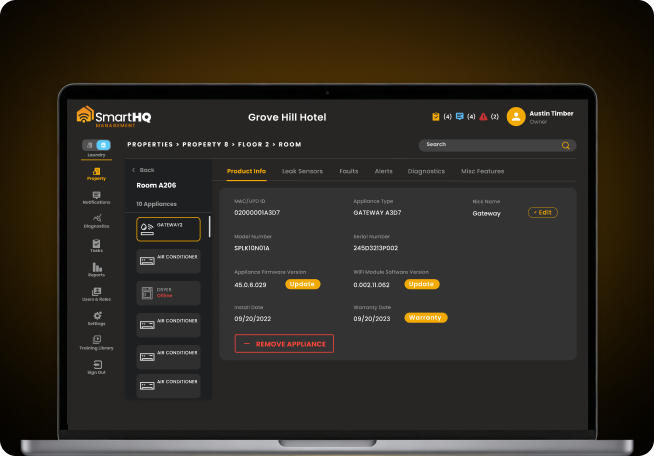
Still managing your entire appliance fleet without real-time visibility?
- Real-time monitoring and precision diagnostics across your portfolio
- Remote controls and batch commands without room-by-room visits
Portfolio-wide
appliance visibility
Real-time
monitoring & control