
Dealing with Vendor Shortages: How Property Managers Can Adapt with Proactive Maintenance


TL;DR
- Technician and vendor shortages leave property managers waiting on repairs, which extends downtime, frustrates tenants, and raises costs. Reactive maintenance, fixing things only after they fail, works poorly when few technicians and parts are available, so a proactive approach makes more sense.
- Regular inspections, ongoing monitoring of appliance performance, and data-driven insights are what proactive maintenance uses to prevent failures. Problems get addressed early and work can be planned for non-critical times. Sensors can collect data on operational health, energy use, and usage patterns to show trends and anomalies.
- Savings can be large: the U.S. Department of Energy notes proactive maintenance can save roughly 8 to 12 percent over preventive maintenance and up to 40 percent over reactive maintenance. Other gains include less downtime, longer appliance life, and maintenance done only when needed, so fewer calls land on a shrinking pool of vendors.
- SmartHQ™ Management gives property teams real-time monitoring across a portfolio, fault codes reported over existing Wi-Fi, and alerts that become tasks with an owner, priority, and due date, so work can be planned before a failure.
Are you tired of scrambling to find available technicians every time an appliance breaks down or a system falters? As a property manager, dealing with vendor shortages is more than just a hassle; it disrupts your property’s operations and adds unnecessary stress. The shortage of reliable technicians means you’re left waiting and scrambling, which can lead to frustrated tenants and delayed repairs. With a limited pool of available technicians and vendors, maintaining appliances and systems becomes increasingly difficult.
What if you could turn this challenge into an opportunity? Proactive maintenance allows you to stay ahead of issues before they escalate. By adopting a proactive maintenance approach, you can anticipate problems, streamline your maintenance processes, and minimize downtime, all while reducing your reliance on an ever-shrinking pool of vendors. Embrace this forward-thinking strategy and transform the way you manage your properties.
The Challenge of Vendor Shortages
Vendor and technician shortages have become a significant issue for property managers, creating a cascade of problems. When appliances or systems fail, the lack of available technicians and parts can lead to extended downtimes, dissatisfied tenants, and increased costs. These shortages can severely impact maintenance schedules, resulting in longer downtimes and higher costs.
In the home appliance sector, particularly for items like washing machines and HVAC systems, maintaining a seamless operation becomes more challenging without timely access to spare parts and technical support.

The traditional reactive maintenance approach, which involves fixing issues as they arise, is no longer sufficient in an environment where vendor resources are scarce. Property managers need a more proactive solution to keep their operations running smoothly despite these challenges.
What Is Proactive Maintenance?
Proactive maintenance is a strategy that focuses on preventing equipment failures through regular inspections, maintenance, and data-driven insights. . By continuously monitoring the performance of appliances and systems, proactive maintenance allows property managers to address potential issues early, reducing downtime and maintenance costs.
Smart sensors are used to monitor every aspect of a machine's performance, integrating this data with business operational data and applying analytics based on artificial intelligence (AI) to derive meaning. This approach enables organizations to predict the future state of equipment and anticipate potential machinery issues before they arise.
For example, in home appliances, sensors gather valuable data about operational health, energy consumption, and usage patterns. This data can then be analyzed to identify trends and anomalies, facilitating timely interventions and ensuring the longevity and efficiency of the equipment.
Benefits of Proactive Maintenance
1. Reduced Downtime: By predicting potential issues before they occur, proactive maintenance helps in planning maintenance activities during non-critical times, reducing unexpected downtimes.
2. Cost Savings: It minimizes the frequency of unnecessary preventive maintenance and avoids the costs associated with emergency repairs. The U.S. Department of Energy notes that proactive maintenance can save roughly 8-12% over preventive maintenance and up to 40% over reactive maintenance.
3. Improved Equipment Lifespan: Regular monitoring and timely maintenance extend the useful life of appliances by addressing minor issues before they become major problems.
4. Efficient Resource Utilization: Proactive maintenance ensures maintenance is performed only when necessary, optimizing the use of resources and reducing waste.
By embracing proactive maintenance, property managers can navigate vendor shortages more effectively, ensuring that their properties remain well-maintained and operational. This proactive approach not only mitigates the impact of vendor shortages but also enhances overall efficiency.
How SmartHQ™ Service Supports Proactive Maintenance
SmartHQ™ Service transforms appliance maintenance through its advanced diagnostic capabilities, enabling proactive maintenance that can foresee and address potential issues before they escalate. The service combines two critical components: the SmartHQ™ Module and the SmartHQ™ Subscription, both designed to work seamlessly together.
The SmartHQ™ Module is a compact, user-friendly device that connects effortlessly with a wide range of GE Appliances. Its plug-and-play setup allows immediate and accurate fault detection, facilitating quicker interventions. This module forms the backbone of the diagnostic process, providing real-time data that can be analyzed to predict future appliance issues.
The SmartHQ™ Subscription enhances this capability by offering a cloud-based repository of data and documentation. Technicians gain access to a vast library of service manuals and repair guides, as well as real-time and historical diagnostic data. This comprehensive database supports in-depth analysis and predictive maintenance by highlighting patterns and anomalies in appliance performance.
Implementing SmartHQ™ Service for predictive maintenance brings several significant benefits:
- Proactive Maintenance: SmartHQ™ Service leverages Internet-of-Things (IoT) technology to provide proactive maintenance solutions. This system empowers property managers and owners to monitor appliance performance, make remote adjustments, and troubleshoot issues before they escalate into significant problems. By receiving proactive maintenance alerts, owners can address potential issues early, minimizing downtime and ensuring tenant satisfaction.
- Advanced Diagnostics: SmartHQ™ Service allows users to perform in-depth tests and diagnostics without disassembly, using a cloud-based repository of data and documentation. The ability to conduct diagnostics without disassembly further streamlines the repair process, often allowing issues to be detected and resolved on the first visit.
- Cost Efficiency: By reducing service costs and improving operational performance, SmartHQ™ Service offers significant cost savings. The precision diagnostics and task management solutions contribute to increased efficiency, helping service technicians manage appliances with ease from a single location.
- Real-Time Insights: The service provides real-time access to appliance data, enabling proactive maintenance and quicker issue resolution. This helps in detecting and resolving issues on the first visit, thus enhancing customer satisfaction.
- Comprehensive Connectivity: By connecting the SmartHQ™ Service Bluetooth Module to appliances, users can access a vast library of manuals, service guides, and instructional videos, facilitating efficient troubleshooting and optimal appliance performance6.
- Proactive Maintenance: SmartHQ™ Service supports proactive maintenance by notifying users of potential issues before they become significant problems, thereby reducing service costs and improving operational performance.
- User-Friendly Interface: The service is designed to be user-friendly, allowing technicians to diagnose and troubleshoot appliance issues efficiently using the SmartHQ™ Service app, thus minimizing labor time and increasing service capacity
With vendor and technician shortages impacting property management, implementing a robust predictive maintenance strategy is essential. SmartHQ™ Service provides property managers and technicians with the tools they need to stay ahead of potential issues, ensuring appliances are maintained efficiently and effectively. By leveraging advanced diagnostics and data-driven insights, SmartHQ™ Service minimizes downtime, reduces costs, and extends the lifespan of appliances, ultimately enhancing operational efficiency.
Ready to take your maintenance strategy to the next level? Empower your property management with SmartHQ™ Service. Contact us today to learn more about how our advanced diagnostic solutions can improve your maintenance approach and keep your operations running smoothly.
Vendor shortages mean longer waits for technicians and parts, which extends appliance downtime, frustrates tenants, and raises costs. Maintenance schedules slip as managers scramble to find available help, and the effect is sharper for washing machines and HVAC systems that need timely parts and technical support. A reactive approach no longer holds up.
Proactive maintenance is a strategy that prevents equipment failures through regular inspections, maintenance, and data-driven insights. Teams monitor appliance performance continuously so they can address potential issues early. Smart sensors can gather data on operational health, energy consumption, and usage patterns, which is analyzed to find trends and anomalies for timely intervention.
The U.S. Department of Energy notes savings of up to 40 percent over reactive maintenance. It also cites roughly 8 to 12 percent savings over preventive maintenance. The savings come from fewer emergency repairs and less unnecessary preventive work, since maintenance happens only when needed.
It lowers the number of emergency calls, so fewer jobs land on a limited pool of technicians. By catching issues early, teams can plan maintenance for non-critical times instead of reacting to breakdowns. This helps teams stay ahead of problems despite scarce vendor resources.
Four benefits stand out: reduced downtime, cost savings, longer equipment lifespan, and efficient use of resources. Regular monitoring and timely maintenance extend appliance life by addressing minor issues before they grow. Maintenance performed only when necessary also reduces waste.
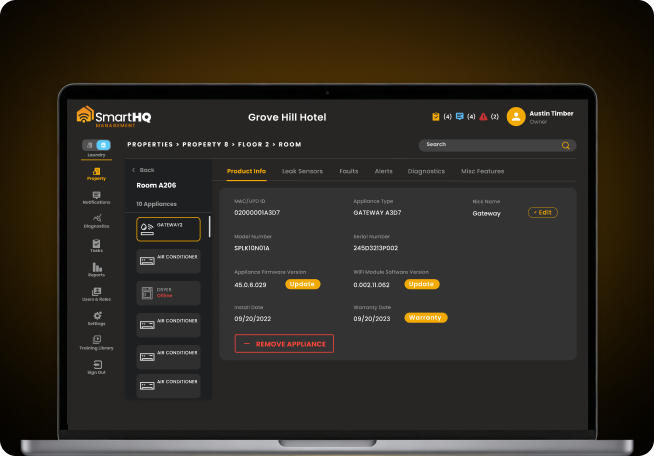
Still managing your entire appliance fleet without real-time visibility?
- Real-time monitoring and precision diagnostics across your portfolio
- Remote controls and batch commands without room-by-room visits
Portfolio-wide
appliance visibility
Real-time
monitoring & control