
Leveraging the Power of IoT in the Field Service Industry


TL;DR
- IoT connects equipment, vehicles, and tools to a network so field service teams can see asset condition in real time. This shifts maintenance from reactive to proactive, cutting unplanned downtime and keeping service uninterrupted for customers.
- IoT has five uses in field service: real-time asset monitoring with predictive maintenance, remote diagnostics, resource and route optimization, proactive customer service, and self-service portals. Sensor data helps teams schedule maintenance at the right time and lets technicians diagnose problems without being on site.
- Remote diagnostics lets senior technicians analyze data and guide on-site staff in real time, which removes unnecessary site visits and speeds repairs. Route optimization sends the nearest skilled technician and saves travel time and fuel. Faster, better-prepared visits also support customer satisfaction and loyalty.
- SmartHQ™ Service puts diagnostics on a technician's mobile device: connect to a compatible GE Appliance through the SmartHQ module, run diagnostics, and read real-time fault codes straight from the appliance.
Imagine a world where equipment issues are detected before they even cause a hiccup in your business operations. Picture a scenario where maintenance is performed proactively, minimizing downtime and maximizing efficiency. This world is not a distant dream but a reality being shaped by the integration of the Internet of Things (IoT) in the field service industry.
The field service industry is undergoing a remarkable transformation, and IoT is at the forefront of this revolution. With billions of devices connected globally, IoT is changing the way businesses operate, empowering them to optimize their processes, enhance customer experiences, and stay ahead of the competition.
Real-time asset monitoring through IoT is saving businesses millions of dollars by preventing unexpected equipment failures. By continuously monitoring the performance, health, and condition of assets, organizations can identify potential issues before they escalate, allowing for timely maintenance and uninterrupted service delivery.
In the age of customer-centricity, IoT enables field service organizations to provide exceptional customer service and experiences. Through connected devices and IoT-enabled platforms, businesses can monitor service performance, collect feedback, and anticipate customer needs in real time. This data-driven approach enables proactive recommendations, personalized services, and tailored solutions, leading to increased customer satisfaction and loyalty.
In this article, we will explore in-depth the transformative impact of IoT in the field service industry. We will delve into real-time asset monitoring, predictive maintenance, remote diagnostics, optimal resource allocation, and proactive customer service. Join us as we uncover the possibilities and opportunities that lie ahead in this exciting era of IoT-powered field service operations.
Real-Time Asset Monitoring and Predictive Maintenance
One of the most significant impacts of IoT on the field service industry is real-time asset monitoring. Through the deployment of sensors and connected devices, businesses can continuously monitor the performance, health, and condition of their assets remotely. This real-time data empowers organizations to identify potential issues or anomalies before they escalate into costly failures.

By leveraging predictive analytics, businesses can utilize the data collected from IoT devices to anticipate maintenance requirements accurately. Predictive maintenance enables proactive measures to be taken, reducing downtime and optimizing the efficiency of field service operations. Organizations can save costs, streamline maintenance processes, and ensure uninterrupted service delivery to customers.
Real-time asset monitoring and predictive maintenance go hand in hand to create a proactive approach to equipment management. By constantly monitoring asset performance, organizations gain valuable insights into patterns, trends, and anomalies that can impact equipment health. These insights enable businesses to schedule maintenance activities at the optimal time, avoiding unplanned downtime and minimizing disruptions to service delivery.
Enhanced Remote Diagnostics and Troubleshooting
IoT has revolutionized the way field service technicians diagnose and troubleshoot equipment issues. By connecting devices and machinery to the IoT network, valuable data about their performance and operational parameters can be collected and analyzed in real-time. This data-driven approach enables technicians to identify the root causes of problems quickly and accurately, even without physical presence at the site.
Remote diagnostics and troubleshooting significantly improve the efficiency of field service operations. Technicians can remotely access equipment, assess its condition, and provide step-by-step instructions to on-site personnel, facilitating faster repairs and minimizing service interruptions. This capability eliminates the need for unnecessary site visits, reducing costs and improving overall response times.
Moreover, remote diagnostics and troubleshooting enable field service organizations to leverage the expertise of their senior technicians and subject matter experts. With IoT-enabled systems, these experts can remotely analyze diagnostic data and provide guidance to on-site technicians in real-time. This collaborative approach enhances problem-solving capabilities, accelerates issue resolution, and ensures the highest level of service quality.
Optimal Resource Allocation and Route Optimization
Efficiently allocating resources and optimizing service routes are critical aspects of the field service industry. IoT plays a vital role in enhancing these processes, enabling organizations to streamline their operations and maximize productivity. By equipping vehicles, tools, and assets with IoT devices, businesses gain real-time visibility into their location, availability, and utilization.
This visibility allows field service managers to make informed decisions regarding resource allocation. They can identify the nearest available technician with the required skills and assign them to a service request promptly. Additionally, by analyzing historical data and traffic patterns, IoT-powered systems can optimize service routes, ensuring technicians reach their destinations in the most efficient manner, saving time and fuel costs.
Optimal resource allocation and route optimization not only improve operational efficiency but also have a positive impact on customer satisfaction. By reducing travel time and ensuring timely service delivery, organizations can enhance the overall customer experience. Customers appreciate prompt and efficient service, leading to increased loyalty and positive word-of-mouth referrals.
Proactive Customer Service and Experience
IoT empowers businesses in the field service industry to take a proactive approach to customer service and deliver exceptional experiences. By utilizing connected devices and IoT-enabled platforms, organizations can monitor service performance, collect feedback, and anticipate customer needs in real-time. This valuable data can be leveraged to offer proactive recommendations, personalized services, and tailored solutions to customers.
Furthermore, IoT technology enables the implementation of self-service portals and mobile applications, empowering customers to log service requests, track progress, and receive updates conveniently. By providing seamless and transparent interactions, businesses can enhance customer satisfaction and build long-lasting relationships.
Proactive customer service and personalized experiences strengthen the bond between businesses and their customers. By leveraging IoT capabilities, organizations can gain valuable insights into customer preferences, usage patterns, and satisfaction levels. Armed with this information, businesses can anticipate customer needs, proactively address potential issues, and deliver customized solutions. The result is improved customer loyalty, higher retention rates, and a competitive edge in the field service industry.
SmartHQ Pro: Empowering the Field Service Industry
SmartHQ Service Industry’s Most Powerful Appliance Diagnostics Platform

In the field service industry, the SmartHQ Service platform stands out as the most powerful appliance diagnostics solution available. It quickly connects to appliances and runs a suite of tests to produce diagnostic data that can be analyzed by technicians or support staff. This information allows for more accurate diagnoses, quicker repairs, and fewer callbacks. With SmartHQ Service, field service technicians can efficiently identify and resolve appliance issues, minimizing downtime and optimizing service delivery.
SmartHQ Management: Industry’s Most Powerful Appliance Management Platform
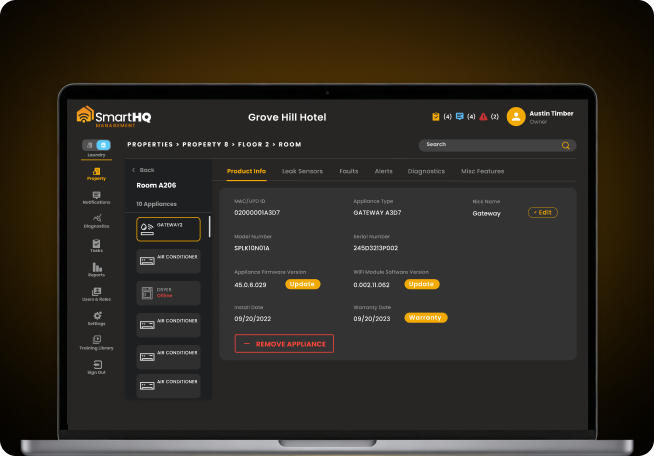
For multi-unit owners and building managers, SmartHQ Management offers the industry's most powerful appliance management platform. It empowers property managers to get more done with a simple, scalable appliance management solution. Whether you're monitoring appliance performance, making individual room adjustments, or troubleshooting and diagnosing units remotely, SmartHQ Management helps property managers keep their occupants happy and their business running smoothly.
The integration of IoT technology into the field service industry has revolutionized how businesses operate and deliver services. Real-time asset monitoring, predictive maintenance, enhanced remote diagnostics, optimal resource allocation, and proactive customer service are just a few of the many ways in which IoT is transforming the field service industry. Embracing these advancements enables businesses to streamline their operations, improve efficiency, and ultimately deliver exceptional value to their customers. As the field service industry continues to evolve, embracing IoT becomes increasingly crucial for organizations to stay competitive and thrive in the digital age.
By incorporating IoT technologies, such as SmartHQ Service and SmartHQ Management, businesses in the field service industry can position themselves as industry leaders, providing unparalleled service and exceeding customer expectations. The power of IoT is undeniable, and its impact on the field service industry will continue to shape the future of this sector for years to come.
Remember, the future belongs to those who leverage the transformative capabilities of IoT in the field service industry. Embrace IoT, unlock its potential, and pave the way for a future of unparalleled success and innovation!
Key Takeaways:
- Real-time asset monitoring and predictive maintenance empower organizations to proactively address maintenance requirements, reducing downtime and optimizing efficiency.
- Remote diagnostics and troubleshooting enable technicians to identify and resolve equipment issues remotely, minimizing service interruptions.
- IoT facilitates optimal resource allocation and route optimization, enhancing productivity and reducing costs.
- Proactive customer service and personalized experiences can be achieved through IoT-enabled platforms, ensuring customer satisfaction and loyalty.
- SmartHQ Service and SmartHQ Management are powerful IoT-based platforms that enhance diagnostics, repairs, and appliance management in the field service industry.
Field service teams use IoT sensors and connected devices to monitor asset health, predict maintenance needs, diagnose problems remotely, track vehicles and tools, and run customer-facing portals. The common result is less downtime, fewer unnecessary site visits, and faster response, all driven by real-time data from connected equipment.
Predictive maintenance uses data from IoT devices to anticipate when equipment will need service, so work is scheduled before failure. It pairs with real-time monitoring: constant tracking shows patterns, trends, and anomalies that affect equipment health. That lets teams avoid unplanned downtime and keep disruption to customers low.
Technicians can often start the diagnosis remotely when equipment is connected. They can access equipment data, assess its condition, and give step-by-step instructions to on-site staff, while senior experts review diagnostics in real time. This cuts unnecessary visits and improves response times.
Managers get real-time visibility through IoT into where vehicles, tools, and technicians are and who is available. They can assign the nearest technician with the right skills, and analysis of historical data and traffic patterns optimizes routes. This saves time and fuel and gets customers service sooner.
SmartHQ Service lets technicians connect to a compatible GE Appliance through the SmartHQ module on a mobile device, run diagnostics, and read real-time fault codes straight from the appliance. They can also check service history and keep session notes tied to the appliance.
Still troubleshooting laundry equipment by trial and error?
- Real-time fault codes read straight from the appliance
- Isolated component testing without a full teardown
Real-time
leak monitoring