
How to Increase Energy Efficiency in Short-Term Rentals


TL;DR
- Owners of short-term rentals depend on energy efficiency for profitability, and seasonality and vacant stretches make it hard to manage. Properties need to run efficiently year-round, which means balancing guest comfort against energy conservation to keep costs under control.
- Use smart appliances that add automation, diagnostics, and remote control to Energy Star-rated efficiency, plus smart thermostats and apps to keep use in check. Also run routine system-wide diagnostics, remote monitoring, and testing across units so scheduling does not depend on guesswork.
- Software is only part of the answer, since insulation and weather stripping still protect the interior. Appliance diagnostics can show historical changes in energy efficiency, which may signal that upgrades are needed. Lower energy costs also let owners keep nightly rates competitive and retain more revenue per booking.
- SmartHQ™ Management gives owners real-time monitoring and control across units, remote controls and batch commands that avoid room-by-room visits, and reports that track energy use separately, so vacant rentals need fewer trips.
Short-term rental properties (for stays of just a few days up to 3 or 4 months) create excellent opportunities for passive income and portfolio growth. If you own and operate these sought-after properties, they must be running at peak performance year-round, and in many cases perform with greater efficiency than most homes, to keep them profitable.
Short-term rentals are those listings usually made available through private, 3rd-party booking services. These include vacation homes and houses, as well as short-term rental of individual rooms or apartments via web services like Airbnb, Vrbo, and Booking.com. Since 2020, an overlap has been created between established hospitality companies reaching into the short-term market, and short-term rental providers operating more like boutique hotels. AirDNA, a data company that researches trends in the booming rental industry, is forecasting an 8.6% increase in short-term rental properties available on the market in 2023, following a 20.6% increase in new properties during 2022 alone.
The demand for short-term renting appears here to stay, opening the door to property management growth and new solutions for efficiency. Across each of these rental categories, there is one underlying factor that drives owner profitability: Energy Efficiency.
Energy Efficiency is one constant factor of property management that keeps your costs and expenses under control, and considering the inherent impact of seasonality for many short-term rentals (i.e. vacation units), it can be among the top of your challenges to optimize both operational and energy efficiency for seasonal and vacant properties.
Additionally, replacing your worn-out equipment with newer or more advanced appliances doesn't necessarily mean more energy consumption - if you know how to manage it all. The experienced property manager can dial-in the ideal balance of home comfort and energy conservation to keep renters comfortable and happy … within budget.
We've put together our recommendations for short-term rental property managers to help increase energy efficiency and reduce unnecessary costs in managing your properties.
Invest in Smart Appliances For Immediate Energy ROI

Upgrade to the energy-efficient benefits of smart appliances, and you not only achieve cost reductions of Energy Star-rated efficiency, but you also enable the automation, diagnostics and remote-control functions that optimize guest comfort as well as energy costs and appliance performance.
Likewise, smart thermostats, smart-home panels and mobile apps allow you and guests to keep energy consumption under control - even during peak usage. Self-learning software and hardware will convert your units into informative, comfortable, cost-effective investments.
Systematize your Appliance Management Routines to Reduce Energy Costs
GE SmartHQ Management is the industry leader in taking the guesswork out of scheduling maintenance and diagnostic routines for appliances across all of your units. System-wide diagnostics, automations, remote controls, monitoring and testing is the difference maker in cost control, especially when facing the challenge of seasonality.
Remote and mobile monitoring and control of all appliances will not only reduce energy costs, but also the costs of labor and damages by diagnosing appliance failures before they create collateral damage, leaks, mold, etc.
Energy Efficiency It Isn’t All Software
You still have to manage the physical components and materials that protect the interior spaces of your properties - with up-to-code insulation and weather stripping for doors and windows. Up-front costs to repair or replace these components can be a bit pricey at first, but could save your energy costs down the road by 50% or more.
These aren’t software components, but appliance diagnostics can definitely alert you to historical changes in energy efficiency, which can alert you to possible needs of upgrades in insulation and weather stripping.
Energy Cost Reduction + Nightly Rate Flexibility = More Dates Booked
Reducing your costs can also affect the rates you charge per night, especially when renters are looking for a few extra dollars in their pockets. By reducing your overall energy consumption, you can retain more revenue per night, allowing you to maintain competitive rates that attract more renters.
Visit GE Appliances' SmartHQ Management, request a demo, and look at your appliance management options using SmartHQ Management. With appliance diagnostic software running within your business, your properties and renters get the proactive benefits of real-time tracking for the health of your residential appliance inventory.
Energy efficiency is the one constant that keeps costs and expenses under control, and it drives owner profitability across vacation homes, rooms, and apartments. Seasonality and vacant periods make optimizing it a top challenge. Lower energy costs also give owners room to keep nightly rates competitive, which can mean more dates booked.
They can, because smart appliances deliver Energy Star-rated efficiency plus automation, diagnostics, and remote control that tune guest comfort, energy cost, and appliance performance. Replacing worn equipment with newer, more advanced appliances does not necessarily raise energy use if it is managed well.
Use system-wide diagnostics, automations, remote controls, monitoring, and testing across all units, since these make the difference in cost control during seasonal swings. Remote and mobile monitoring of every appliance reduces energy, labor, and damage costs by diagnosing failures before they cause leaks or mold.
No, you still need to manage the physical protection of the interior, such as up-to-code insulation and weather stripping on doors and windows. These repairs can cost a lot up front but may reduce energy costs over time. Appliance diagnostics can flag historical changes in efficiency that point to insulation upgrades.
Remote monitoring lets managers track the health of their appliance inventory in real time and catch failures before they create collateral damage such as leaks and mold. It cuts labor and damage costs along with energy costs. SmartHQ Management helps schedule maintenance and run diagnostics across units.
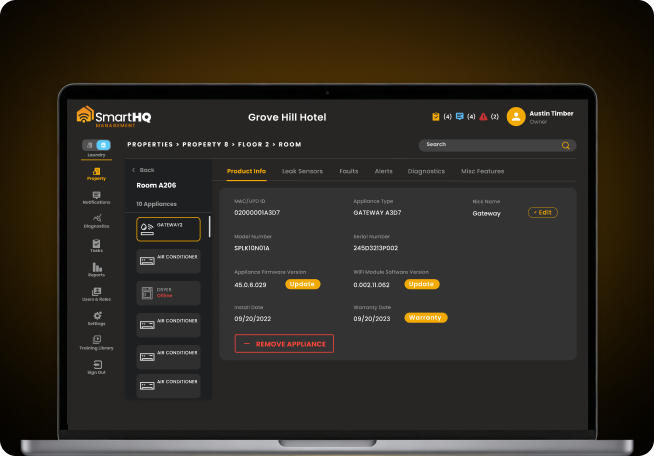
Still managing your entire appliance fleet without real-time visibility?
- Real-time monitoring and precision diagnostics across your portfolio
- Remote controls and batch commands without room-by-room visits
Portfolio-wide
appliance visibility
Real-time
monitoring & control